Integrated
Multiple Source Systems:
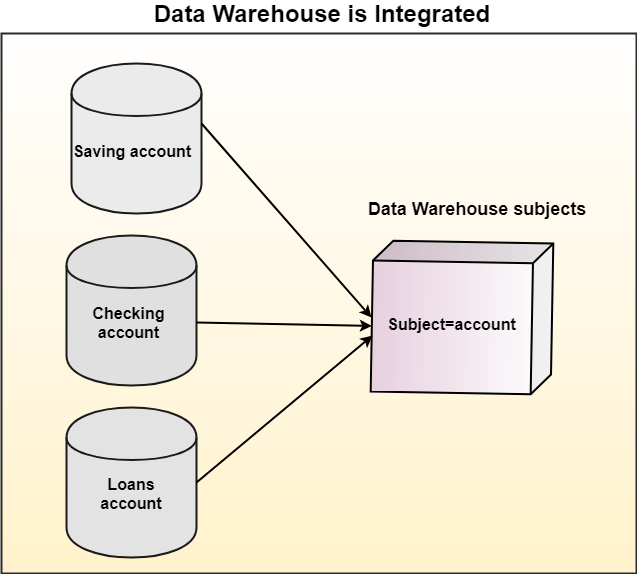
In most organizations, data is stored across various systems. For example, a bank might have separate systems for savings accounts, checking accounts, and loans. Each system is designed to serve a specific purpose and might have its own database, schema, and data formats.
Unified Subject Areas:
The data warehouse is a centralized repository where data from these different source systems is brought together. This integration is not just about storing the data in one place; it involves transforming and aligning the data to be analyzed.
Consistency and Standardization:
During integration, the data is often standardized to ensure consistency. For example, account numbers might be formatted differently in the source systems, but they are unified in a standard format in the data warehouse. This standardization is crucial for accurate reporting and analysis.
Benefits:
Holistic View: The data warehouse provides a comprehensive view of a subject by integrating data from different sources. For example, a bank can now analyze a customer's relationship across all accounts rather than looking at each in isolation.
Improved Decision-Making: With integrated data, organizations can perform more sophisticated analyses, leading to better decision-making. For example, they can understand a customer's total exposure by analyzing their savings, checking, and loan accounts together.
Efficiency: Analysts and business users can access all the relevant data in one place without needing to query multiple systems.