Typical Data Architecture
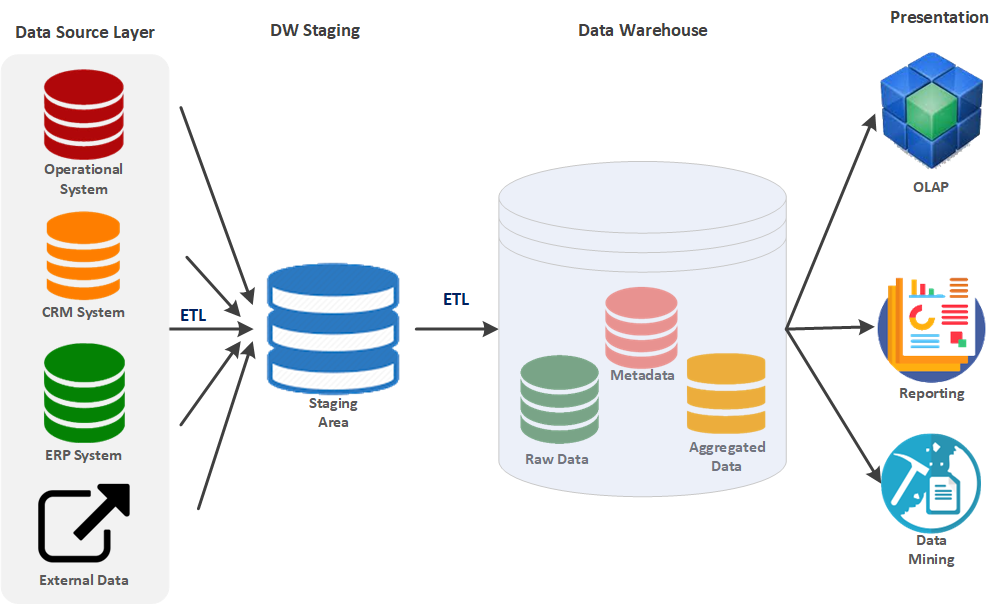
Data Source Layer
Operational System: This includes data from various operational systems like transactional databases. CRM System: Data from customer relationship management systems. ERP System: Data from enterprise resource planning systems. External Data: Data that might come from external sources outside the organization. These sources feed data into the Data Warehouse system. Depending on the source, the data might be structured or unstructured.
DW Staging
Staging Area: This is an intermediate storage area used for data processing during the ETL (Extract, Transform, Load) process. ETL Process: Extract: Data is extracted from various data sources. Transform: The extracted data is transformed into a format suitable for analysis and reporting. This might include cleaning, normalizing, and aggregating the data. Load: The transformed data is then loaded into the Data Warehouse.
Data Warehouse
Raw Data: The unprocessed data loaded directly from the staging area. Metadata: Data about the data, which includes information on data definitions, structures, and rules. Aggregated Data: Summarizing or aggregating data for efficient querying and analysis.
Presentation Layer
**OLAP (Online Analytical Processing): **This tool is used for multidimensional data analysis in the warehouse, enabling users to analyze data from various perspectives. Reporting: Involves generating reports from the data warehouse, often for decision-making and business intelligence purposes. Data Mining: This involves analyzing large datasets to identify patterns, trends, and insights, often used for predictive analytics.
Flow of Data
Data Source Layer → Staging Area: Data is extracted from multiple sources and brought into the staging area. Staging Area → Data Warehouse: The data is transformed and loaded into the data warehouse. Data Warehouse → Presentation Layer: The data is then used for various purposes, such as OLAP, Reporting, and Data Mining.
This architecture ensures that data is collected, processed, and made available for analysis in a structured and efficient manner, facilitating business intelligence and decision-making processes.