Types of Cloud Services
SaaS
Software as a Service
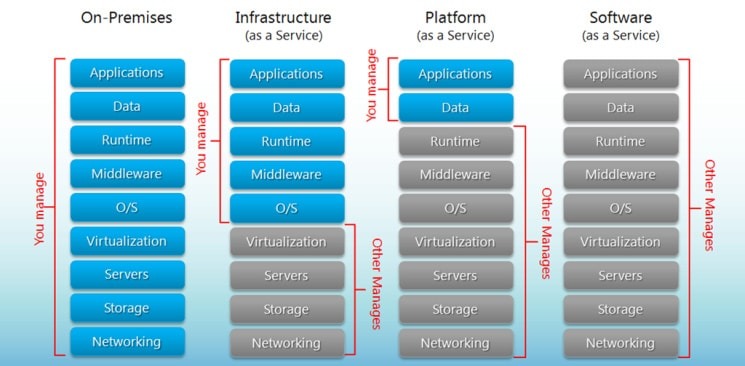
Cloud-based service providers offer end-user applications. Google Apps, DropBox, Slack, etc.
- Web access to Software (primarily commercial).
- Software is managed from a central location.
- Delivery 1 - many models.
- No patches, No upgrades
When not to use
- Hardware integration is needed. (Price Scanner)
- Faster processing is required.
- Cannot host data outside the premise.
PaaS
Platform as a Service
Software tools are available over the internet. AWS RDS, Heroku, Salesforce
- Scalable
- Built on Virtualization Technology
- No User needed to maintain software. (DB upgrades, patches by cloud team)
When not to use PaaS
- Propriety tools don't allow moving to diff providers. (AWS-specific tools)
- Using new software that is not part of the PaaS toolset.
IaaS
Infrastructure as a Service
Cloud-based hardware services. Pay-as-you-go services for Storage, Networking, and Servers.
Amazon EC2, Google Compute Engine, S3.
- Highly flexible and scalable.
- Accessible by more than one user.
- Cost-effective (if used right).
Serverless computing
Focuses on building apps without spending time managing servers/infrastructure.
Feature automatic scaling, built-in high availability, and pay-per-use.
Use of resources when a specific function or event occurs.
Cloud providers handle the deployment, and capacity, and manage the servers.
Example: AWS Lambda, AWS Step Functions.
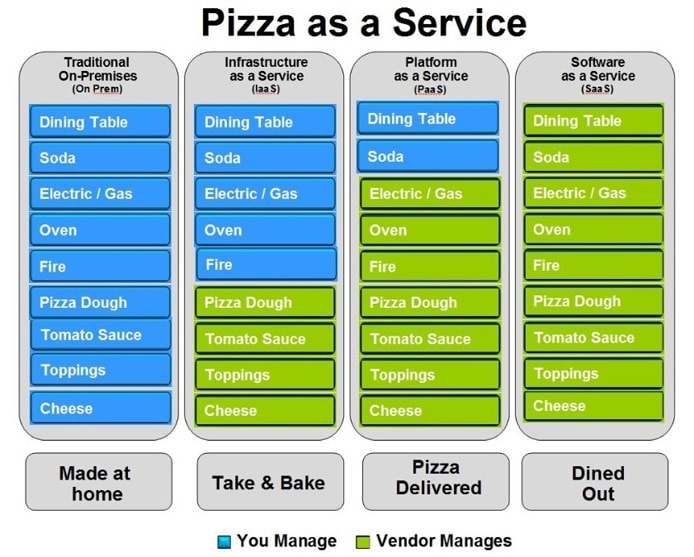
Easy way to remember SaaS, PaaS, IaaS
bigcommerce.com